
Choose VCCLHosting if your brief requires hosting from its own Kolhapur datacenter; choose MilesWeb if your existing deployment already meets your requirements and switching would add unnecessary migration work. This 2026 comparison separates a location-led infrastructure decision from a decision to keep a working hosting setup.
- vcclhosting vs milesweb: choose VCCLHosting for a Kolhapur-led hosting brief; retain MilesWeb when your existing deployment meets requirements.
- For VPS hosting, compare operating systems, administration duties and recovery procedures before comparing plan labels.
- A datacenter location does not establish application speed; test the actual workload from your users’ locations.
- Compare billing terms, migration responsibilities and renewal conditions before approving a hosting change.
Why this matters
Changing hosting affects more than the server. Your application, DNS records, email routing, certificates and recovery process all need an owner during the move. A provider comparison is useful only when it identifies a reason to accept that work.
Start with the hosting categories offered by VCCLHosting: Windows and Linux VPS, dedicated cloud servers, Forex VPS, and shared or reseller hosting. Its own datacenter in Kolhapur is a concrete selection criterion for Indian businesses and developers with a location-led brief. It is not, by itself, proof of faster application responses or better support.
For your 2026 shortlist, separate requirements from preferences. An operating-system dependency is a requirement; a familiar dashboard is usually a preference. A successful comparison makes that distinction before choosing a winner.
At a glance
| Dimension | VCCLHosting | MilesWeb |
|---|---|---|
| Best for | Indian businesses and developers seeking the stated Kolhapur-based offering | Existing customers whose deployment already meets requirements |
| Datacenter fit | Own datacenter in Kolhapur | Match the proposed deployment location to your requirements |
| Operating-system fit | Windows and Linux VPS are part of the offering | Confirm the operating system and access rights for the proposed plan |
| Specialised workload | Forex VPS is part of the offering | Match the proposed service to your trading application and broker connection |
| Migration continuity | Requires a migration plan when moving an existing deployment | Staying avoids a provider-to-provider move for an existing customer |
| Administration | Define responsibilities for the selected service | Define responsibilities for the selected service |
| Performance evidence | Evaluate with your application | Evaluate with the same application and test conditions |
| Pricing model | Compare the selected service’s billing and renewal terms | Compare the proposed service’s billing and renewal terms |
| Standout distinction | Explicit Kolhapur datacenter ownership | Continuity when the current setup already works |
The best fit follows your workload, not a universal ranking
Choose the service category before choosing the provider. A business website, a Windows application and a trading terminal do not create the same hosting brief. Comparing them under a single promise of better hosting hides the requirements that decide whether a service fits.
Write down what must run, who will administer it and what happens when it fails. Include your application dependencies, expected traffic pattern and recovery requirements. These details turn a general comparison into an acceptance checklist.
For an existing MilesWeb customer, the alternative must solve an identifiable problem. A change of provider without a change in outcomes creates work without establishing a benefit. For a new deployment, compare both proposals against the same requirements rather than treating the incumbent advantage as relevant.
The Kolhapur offering wins when location is a requirement
VCCLHosting is a fit for Indian businesses and developers seeking VPS hosting from its own Kolhapur datacenter. That is the clearest supported reason to place it on a location-led shortlist. You can evaluate the location against your infrastructure brief without assuming an application-speed advantage.
Distinguish datacenter location from every other location-related question. If your requirements cover backup storage, administrative access or contractual jurisdiction, ask about each separately. A server address does not answer all of them.
The limitation is equally clear: geography alone does not establish suitability. Your users’ networks, application design and external dependencies still affect response times. Choose the Kolhapur option because it meets a stated requirement, then test whether the application performs acceptably.
For your 2026 decision, record location as a pass-or-fail criterion only when it genuinely is one. Otherwise, weigh it alongside measured application behaviour rather than letting it decide the purchase alone.
Windows and Linux VPS options help an OS-led shortlist
The client’s stated offering includes both Windows and Linux VPS. That gives you a direct starting point when your application already has an operating-system dependency. It does not establish that every configuration includes the same software, access rights or administration.
Match the operating system to the application, not to a general preference for one provider. Check required versions, installation permissions, scheduled tasks and any dependencies that need elevated access. A compatible operating-system name is only the start of that assessment.
For the MilesWeb proposal, use exactly the same checklist. Confirm the proposed configuration rather than assuming that a broad VPS label answers application-specific questions. Neither provider deserves a compatibility win until the selected service meets your actual requirements.
Developers comparing the wider category can use the VPS hosting guide for developers in India to organise the shortlist. Keep the final acceptance criteria specific to the application you intend to deploy.
A named Forex VPS offering helps discovery, not execution proof
The client explicitly offers Forex VPS, which makes it relevant to a trading-terminal hosting shortlist. That is a category fit, not evidence about execution quality, broker connectivity or uninterrupted operation. Those outcomes require a workload-specific assessment.
Check your terminal, required operating system, restart behaviour and connection to the broker endpoint you actually use. Include any automated trading software in the test. A successful login alone does not show that the complete setup behaves correctly after a restart.
Apply those same checks to a proposed MilesWeb deployment. The winning trading setup is the one that passes your operational checks, not the one with the most specialised label. Do not treat the datacenter’s city as a substitute for testing the relevant connection.
MilesWeb wins continuity when your current setup works
For an existing customer with a satisfactory deployment, MilesWeb wins on avoiding a provider-to-provider migration. Keeping the service preserves the current deployment rather than requiring a cutover to a new host. This is a genuine advantage when there is no unresolved requirement driving a change.
The limitation is that continuity can preserve an existing problem. If your current arrangement fails an application requirement, staying is not a solution simply because it is familiar. Name the failure and define what the replacement must demonstrate.
Before switching, assign responsibility for these tasks:
- Application transfer: Move files, databases and environment settings.
- DNS cutover: Change the required records and verify resolution.
- Service checks: Test certificates, email routing and scheduled jobs.
- Rollback: Define how to return to the previous working deployment.
This is the right axis for the migration decision: an established requirement versus the disruption needed to satisfy it. A different provider name is not a migration objective.
Neither provider wins administration without a defined scope
Hosting and administration are separate purchasing decisions. Do not assume that renting infrastructure includes application maintenance, operating-system patching, incident investigation or recovery work. Put those responsibilities into the service brief.
Ask who handles updates, firewall changes, database troubleshooting and restoration. Then ask what access you retain and how urgent requests are handled. These questions matter whether you choose shared hosting, a VPS or a dedicated cloud server.
The better administration arrangement is the one your team can operate. A technically suitable server still creates a poor fit if essential tasks have no owner. Conversely, buying help for tasks your team already handles requires a clear operational reason.
For your 2026 evaluation, assign each task to your team or the provider. Resolve every unassigned task before deployment rather than discovering the gap during an incident.
Performance is a tie until the application test separates them
A provider-wide speed claim does not establish how your application will behave. Test the proposed configuration using the same application, dataset and requests. Keep the test conditions consistent enough that a difference has a useful explanation.
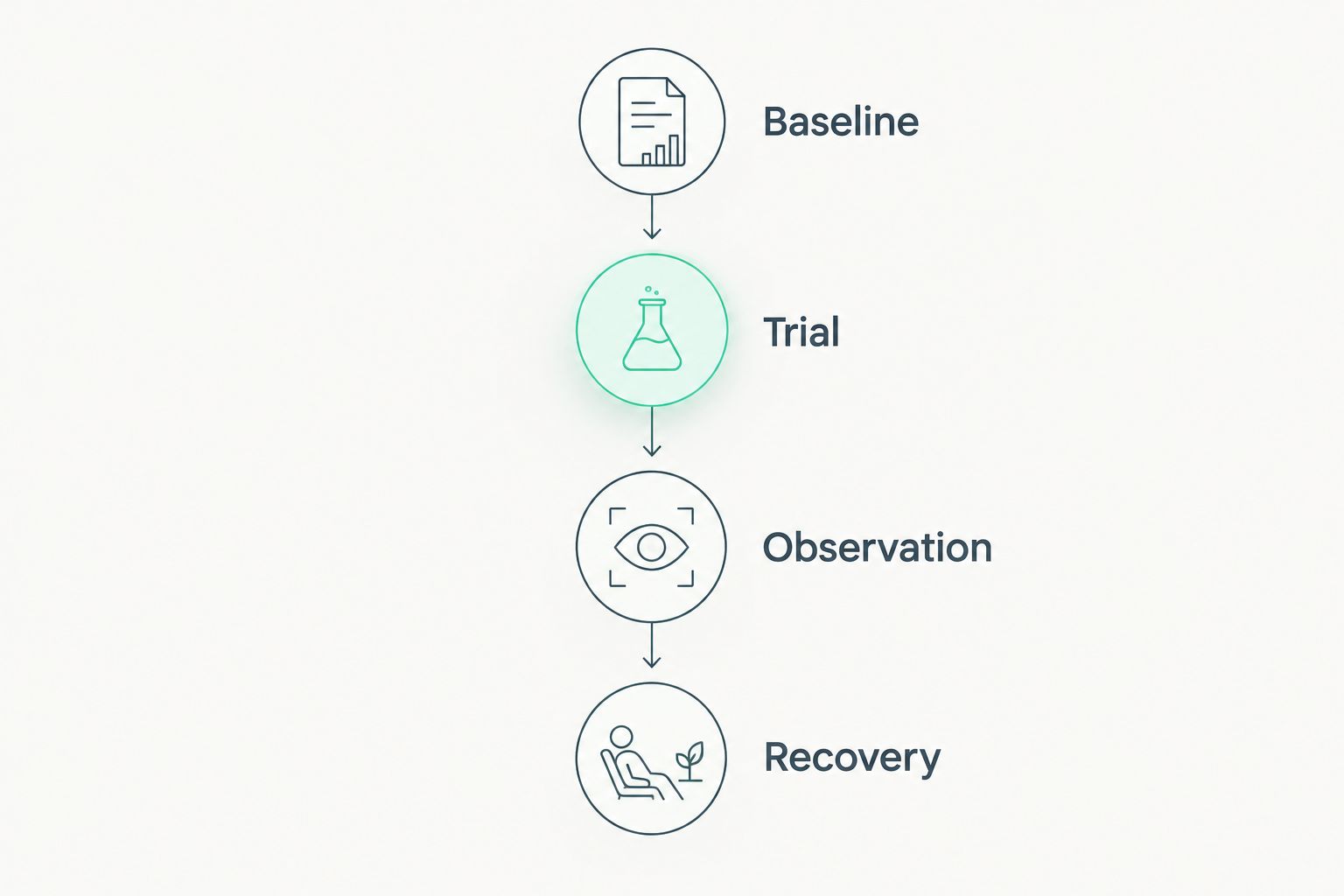
Use this recommended acceptance process:
- Baseline: Record the current application’s behaviour under representative requests.
- Trial: Run a 24-hour application test that includes scheduled jobs.
- Observation: Extend to a 7-day observation period when weekly tasks matter.
- Recovery: Complete 2 restore checks using the recovery process you intend to keep.
These are proposed evaluation steps, not provider performance figures or promised service levels. Adjust the test window to cover your actual workload rather than treating its duration as proof of reliability.
Measure outcomes that affect your users: completed requests, failed requests, application response times and successful background jobs. Record the test location and configuration alongside the results. Without those details, a faster result is difficult to interpret.
Keep performance undecided until comparable results establish a difference. This avoids awarding a win based on geography, a plan name or an unrelated benchmark.
Pricing: compare billing structure and responsibility together
Compare the selected services’ billing models rather than assuming that either provider has one model across its entire catalogue. Review the billing interval, renewal conditions, cancellation process and treatment of optional services. Keep the comparison tied to the configuration you intend to use.
A fixed configuration is easier to budget when its recurring terms and included responsibilities are clear. A configuration you can change offers flexibility only if you understand how those changes affect billing and administration. Neither structure is automatically better.
Request a written scope covering:
- The server or hosting configuration being purchased.
- Software licensing and control-panel responsibilities.
- Backup storage, restoration work and retention requirements.
- Migration work and any continuing administration.
- Renewal, cancellation and configuration-change terms.
For a 2026 purchase, evaluate the continuing arrangement as carefully as the initial order. A billing comparison is incomplete when one proposal leaves essential work with your team and the other assigns it to the provider.
Final verdict: choose the requirement you can name
Choose VCCLHosting if location leads your brief
Best for: Indian businesses and developers specifically seeking the stated Kolhapur-based hosting offering. Its Windows/Linux VPS, dedicated cloud server, Forex VPS and shared/reseller categories provide starting points for different workloads. Select the relevant category, then verify configuration, administration and recovery requirements.
The tradeoff is migration work if you already host elsewhere. Accept that work only when the proposed deployment satisfies an identifiable requirement that justifies changing providers.
Choose MilesWeb if a working deployment should stay put
Best for: existing customers whose current setup meets their application and operational requirements. Staying avoids a provider migration and lets you focus on the application rather than a hosting cutover.
The tradeoff is retaining any unresolved limitations of the current arrangement. If you cannot meet a requirement through the existing service, assess an alternative against a written acceptance test rather than relying on familiarity.
| Dimension | Winner |
|---|---|
| Best fit | Determined by workload and operating responsibilities |
| Explicit Kolhapur datacenter requirement | VCCLHosting |
| Operating-system compatibility | The selected configuration that meets application requirements |
| Forex workload suitability | The deployment that passes terminal and connection checks |
| Avoiding migration for a satisfied existing customer | MilesWeb |
| Administration | Tie until responsibilities are agreed |
| Application performance | Tie until comparable testing establishes a difference |
| Billing structure | The proposal that matches scope and budgeting needs |
FAQ
Is VCCLHosting better than MilesWeb for an Indian business?
VCCLHosting is a fit when an Indian business specifically requires its stated Kolhapur-based hosting offering. An existing MilesWeb customer whose deployment already meets requirements has a clear reason to stay: avoiding an unnecessary provider migration.
Should I change hosting if my current website works?
Change hosting only when the new deployment satisfies an identifiable requirement or resolves a documented problem. A working deployment creates a continuity advantage that a proposed replacement needs to justify.
Does an Indian datacenter guarantee faster hosting for Indian users?
No, an Indian datacenter does not guarantee faster application responses for every Indian user. Test the application from relevant user locations because network paths, application behaviour and dependencies affect the result.
What should I check before choosing Windows or Linux VPS hosting?
Check the operating system your application requires, its software dependencies and the access needed to administer it. Confirm versions, permissions and maintenance responsibilities for the selected configuration.
How should I compare the cost of these hosting options?
Compare written billing terms for equivalent configurations and responsibilities. Include licensing, backups, restoration, migration and administration so the proposals cover the same work.
What should I test before moving a trading terminal?
Test the terminal, its required operating system, restart behaviour and connection to the broker endpoint you use. Include automated trading software and the intended recovery process rather than checking login alone.
What should a hosting migration plan include?
A hosting migration plan should identify application transfer, DNS changes, service checks and rollback responsibilities. Verify certificates, email routing and scheduled jobs before retiring the previous deployment.
One last thing
Write the rollback plan before scheduling the move. A migration checklist explains how to leave the current host; a rollback plan explains what happens when the replacement fails an acceptance check. Decide who can stop the cutover and which working deployment remains the fallback.
That decision is more useful than another feature-table row. It gives your team a clear response when deployment results differ from expectations.